The Total War Games Ranking
Total War is quite the venerable franchise, and with the recent release of Total War: Rome Remastered and Warhammer 3 lurking on the horizon, it’s the perfect moment to look back and evaluate the Total War Games Ranking franchise from worst to greatest.
While I wouldn't call any of the Total War games weak in terms of technical quality, like with any franchise (such as the Marvel Cinematic Universe), some entries are better representations of the genre's high quality than others. Every game is built around a robust gameplay loop and a captivating theme.This is our ranking list honouring this unique franchise's contributions to the strategy genre.
TOTAL WAR
GAMES, RANKED:
Total War Saga: Troy | Shogun: Total War | Medieval: Total War | Napoleon: Total War | Total War Saga: Thrones of Britannia | Rome: Total War | Empire: Total War | Total War: Warhammer | Total War: Attila | Total War: Rome 2 | Total War: Three Kingdoms | Total War: Shogun 2
The Best
and Worst Total War Games
15. Total War Saga: Troy
Sofia's Creative Assembly is the developer.
Sega Platform(s): PC, macOS Publisher: Sega
Troy, the first game on the list, is one of the most safe Total War games, and as a result, one of the most frustrating Total War games.
It ends up feeling like a chopped up, compartmentalised, and lighter fantasy version of the more successful Warhammer sub-series (not surprising given that it uses the same engine), albeit with a stunning and colourful presentation of the tail end of the Bronze Age, following Three Kingdoms' lead with the interesting and legendary Homeric Trojan War taking centre stage as the game's setting.
The game contains some intriguing concepts, such as the various resource pay system, resource restrictions, and weapon mode switching, but their implementation and impact are lacking. Worst of all, Troy's tactical fights, upon which the series was founded, are sadly its weakest component. Despite
Troy's safe mediocrity (especially when compared to its Thrones of Brittania predecessor) and lack of creativity, the franchise's core survives and aids the game's survival.
14. Shogun: Total War
Creative Assembly (Sold Out) is the developer.
Electronic Arts is the publisher.
PC platform(s)
Shogun, a real-time strategy game published in 2000, was a first of its sort, with formations of units taking centre stage in fights rather than single entity command, as in Age of Empires or Starcraft. The player's unification of Japan was given context and an overarching aim via the turn-based strategic layer.
The expansion of the Mongol Invasion a year later brought a new culture to the mix, pitting armies of horsemen against the emerging Samurai elite and their retainers. The series' intriguing historical setting only served to anchor it and explore a less well-represented period and culture in military history, distinguishing it from many other strategy games, historical or otherwise.
However, I nearly didn't want to include this game because Shogun and its successor are what I consider to be historical Total War relics. They are undeniably important to the franchise's survival, but in comparison to where it is now, they are more of a novelty that is better discussed than played. Shogun, on the other hand, has the bones that will make Total War's foundation rock solid.
13. Medieval: Total War
Creative Assembly is the company behind this project.
Activision is the publisher of this game.
PC platform(s)
Medieval continues in the footsteps of Shogun, except it takes place in Medieval Europe and the Mediterranean.
Medieval improves on Shogun's triumphs by introducing siege fights and reflecting a wider range of cultures and political actors, thanks to an improved engine. Medieval has the advantage of being able to depict the history of warfare in the Middle Ages in multiple stages, giving the game a better sense of evolution and historical advancement.
Nonetheless, Medieval, like Shogun, has gone down in Total War history as a significant bookmark reflecting the developers' commitment to learn from their mistakes, improve, and build on their accomplishments. Not only that, but Shogun and Medieval ultimately lead to Total War's shining moment in 2004 and beyond, which completely eclipsed these two early entries.
12. Napoleon: Total War
Creative Assembly is the company behind this project.
Sega, Typhoon Games, and Feral Interactive are the publishers.
PC and macOS are the platform(s) of choice.
In retrospect, Napoleon feels a much like a Saga title or a massive expansion for Empire, similar to Attila for Rome 2. I remember thinking it was one of the best Total Wars games when it first came out, largely because of the scenario, gunpowder focus, and multiplayer campaign. When compared to Total War games following Shogun 2, both Empire and Napoleon are prisoners of technical restrictions and limited accessible resources.
Napoleon's major problems are widespread unit jank, a lack of size, and a lack of ambition. The game feels too much like an apology for Empire's failure to deliver on its promises, and as a result, it ends up living in the shadow of Empire's ambition rather than improving the game meaningfully. The game's narrative concentration on Napoleon's military career, on the other hand, gives it a distinct personality and is well worth playing at least once.
11. Total War Saga: Thrones of
Britannia
Creative Assembly is the company behind this project.
Sega is the publisher of this game.
PC, macOS, and Linux are the available platforms.
Thrones of Britannia finds itself in an unusual situation as the first official Saga game. It lacks the resources of a standard Total War game, but it must serve as a sort of test bed for new systems that will inevitably find their way into the higher-budget games. Thrones of Britannia succeeds for the most part, but CA's unwillingness to completely commit to the concept hurts its ranking in our ranked Total War list.
Unlike Troy, Thrones offers numerous pretty cool concepts and reworks that were eventually used in later games, like as the mustering system, governors and estates, and retooled provinces. Thrones has serious campaign balance concerns, limited faction and unit diversity, and a negative streamlining of the economics system, while being one of the best technically optimised Total Wars. The game is an excellent example of the Saga series' current untapped potential.
10. Rome: Total War
Developer: creative assembly, Feral interactive
Publisher: Activision , Sega, Feral Interactive
Platform(s): PC, macOS, IOS Android
The debut of Rome: Total War in 2004 was a watershed point for Total War, as it set the standard and direction for all modern Total Wars ever since.
The publication of Rome: Total War in 2004 marked a watershed event in Total War's history, since it established the standard and direction for all subsequent Total Wars.
I believe the discussion of Total War's impact and relevance on the strategy genre should begin with Rome. The vast evolution of the strategic campaign, the switch to full 3D, and extensive modding were among its most important contributions to the franchise. Not only that, but the fantastic backdrop allowed players to pretend to be clever and glory-seeking ancient leaders. The game was so popular and influential in the franchise's history that it prompted two expansions and a remaster.
Time, like history, brings new perceptions, standards, and expectations, and Rome hasn't gotten off easy. Looking back, Rome has several severe AI and unit pathfinding flaws, particularly in siege battles, as well as thin army lists and faction mechanisms for non-Romans, which have tainted the experience.
Though Rome had the most impact on the series, it has been overshadowed by its more refined successor Medieval 2, which has carried the tradition in a more modest fashion, as well as its own, albeit contentious, sequel. Leaving away Rome's recent complicated past, it is still a respectable and notable Total War that is as important to its current success as any of the more recent Total Wars.
9. Empire: Total War
Feral Interactive and Creative Assembly collaborated on this project.
Sega and Feral Interactive are the publishers.
PC, macOS, and Linux are the available platforms.
Ambition in games may be a double-edged sword. It has the potential to be a huge success or a huge failure. Empire is a good illustration of splitting the difference, not because of a meek attitude toward ambition, but because of the disparity between its achievements and failures.
Empire is known for having a dreadful launch (sadly, not the last) and failing to deliver on some of its grandiose promises, such as a multiplayer campaign. Looking past the shaky start and ongoing jank caused by AI and gunpowder implementation concerns, Empire has enough features to indicate its revolutionary ambition.
The inclusion of playable naval fights, the "unpacking" of provinces, the incorporation of technology, and the addition of a multi-theatre strategic map are all major highlights.
8. Total War: Warhamme.
Creative Assembly is the creator.
Sega is a video game publisher.
PC, macOS, and Linux are the platforms supported.
Warhammer triumphed where Empire failed to spark the next Total War revolution. Warhammer is the first Total War game to move away from a typical historical setting and instead focus on a fantasy setting, notably Games Workshop's namesake series. The success of Warhammer is largely due to this aspect, as well as the addition of magic and other fantasy cliches, such as monsters and other wacky beasts and troops, to tactical warfare.
Unfortunately, after its significantly more sophisticated, expansive, and intriguing sequel was published, Warhammer's glow faded swiftly. Furthermore, the focus on chaotic fights, furious action, and light role-playing components in this sub-series compromised complexity in the strategic component of the game, which was an unfortunate tendency in post-Warhammer Total War games.
Warhammer triumphed where Empire failed to spark the next Total War revolution. Warhammer is the first Total War game to move away from a typical historical setting and instead focus on a fantasy setting, notably Games Workshop's namesake series. The success of Warhammer is largely due to this aspect, as well as the addition of magic and other fantasy cliches, such as monsters and other wacky beasts and troops, to tactical warfare.
Unfortunately, after its significantly more sophisticated, expansive, and intriguing sequel was published, Warhammer's glow faded swiftly. Furthermore, the focus on chaotic fights, furious action, and light role-playing components in this sub-series compromised complexity in the strategic component of the game, which was an unfortunate tendency in post-Warhammer Total War games
7. Total War: Attila
Creative Assembly is the company behind this project.
Sega is the publisher of this game.
PC, macOS, and Linux are the available platforms.
Attila was Napoleon's attempt to be Attila. At the time of its release, Attila's major goal was to address Rome 2's flaws and stripped-down features, as it appeared the game was heading down the same route as Empire. Attila, on the other hand, proved to be more than that, as it not only reintroduced promised features, but also iterated, innovated, and expanded the brand.
The introduction of horde mechanisms, as well as the ability to raze and rebuild villages, were notable additions. Attila also added a survival twist to the strategy game, drawing inspiration from the original Rome's Barbarian Invasion expansion. Surprisingly, Attila's major flaws are its perplexingly low optimization and a slew of tactical balancing concerns, which led to the game's demise.
6. Total War: Rome 2
Creative Assembly is the company behind this project.
Sega is the publisher of this game.
PC and macOS are the platform(s) of choice.
Unlike the first journey to the Ancient Mediterranean in 2004, time has been kind to Rome 2 and it may now be regarded a sleeper hit for CA. Rome 2, like Empire, had a dreadful start, and it wasn't until a year later that it became fully playable. CA, on the other hand, persevered and won their first true AAA Total War.
At this time, Rome 2 outperforms even its immediate successor, Attila, because numerous features from Attila were included into Rome 2, and the developers elected to support it with extra post-launch material even five years after its release. Inadvertently, Rome 2 has been graced by a thriving modding scene, giving it immense appeal.
5. Total War: Three Kingdoms
Creative Assembly is the company behind this project.
Sega is the publisher of this game.
PC, macOS, and Linux are the available platforms.
Three Kingdoms is the most recent mainline Total War, and in my opinion, it's also the most honest. The game (a first for the series) devotes itself entirely to a dramatised, idealised, and cinematic rendition of Ancient Chinese history, relying mostly on the Romance rather than the Records of the Three Kingdoms. I wouldn't be shocked if future Total Wars games used this method more heavily.
Three Kingdoms is the most character-driven of the Total War games, with historical figures and their stories taking centre stage as they compete for control of a disintegrating Han-ruled China. The retinue system, greatly expanded and revamped diplomacy, and excellent visual and auditory design are all featured in Three Kingdoms.
4. Total War Saga: Fall of the
Samurai
Creative Assembly is the company behind this project.
Sega and Feral Interactive are the publishers.
PC, macOS, and Linux are the available platforms.
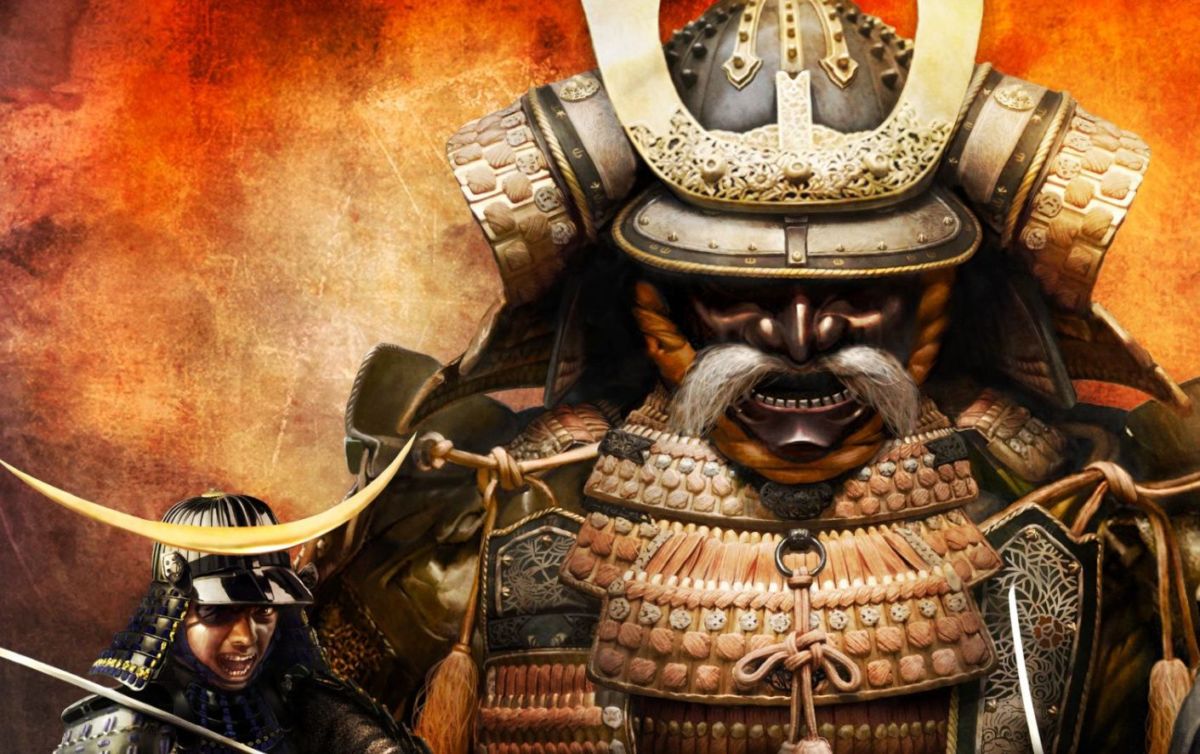
Ironically, the best of the Saga games wasn't even intended to be a Saga game. Fall of the Samurai (later rebranded as a Saga game) was released as a standalone extension for Shogun 2, transporting players to the lesser-known Meiji Restoration period of Japanese history, where pro-Imperial and pro-Shogunate troops battled for Japan's destiny.
Fall of the Samurai is the greatest of the gunpowder-focused Total War games in terms of displaying line combat tactics while removing as much technical jank as Empire and Napoleon did. It also had a strong central topic of tradition vs. modernization, which was mainly successfully realised. The entire excellence of Fall of the Samurai originates from the attention to detail and good design of its parent game.
3. Total War: Warhammer 2
Creative Assembly is the company behind this project.
Sega is the publisher of this game.
PC, macOS, and Linux are the available platforms.
Warhammer 2 builds on the original's legacy and influence on the Total War series by focusing more on the narrative and adding more engaging factions and systems to the fantasy sub-series.
Warhammer 2 has all of the features that made Warhammer so popular, as well as balancing improvements and more post-launch content and updates. The addition of the Mortal Empires campaign, which merges the strategic landscapes from the first and second games into one gigantic mega campaign, is undoubtedly Warhammer 2's most notable feature. However, as a result of this, Warhammer 2 effectively swallows the original, rendering Warhammer insignificant as a gaming experience.
This is a dream come true for any fan of the Warhammer licence. What's also interesting to watch, particularly
2. Medieval 2: Total War
Feral Interactive and Creative Assembly collaborated on this project.
Sega and Feral Interactive are the publishers.
PC, macOS, and Linux are the available platforms.
These final two entries are nearly interchangeable because they are both excellent representations of Total War, but because this is a ranked list, I'll give a specific answer. Medieval 2 is essentially a remake of Rome, but with improved graphics, updated mechanics, and new features. Who'd have guessed that would be enough?
Of course, Medieval 2 shares many of the same flaws as Rome, such as weak AI and pathfinding, but because there was no remake, it's a game set in its own time that is still amazing even when compared to some of the most recent Total Wars games.The most lauded element of Medieval 2 and the reason for its longevity is its extremely vast modding. You
1.
Total War: Shogun 2
Creative Assembly is the company behind this project.
Sega is the publisher of this game.
PC, macOS, and Linux are the available platforms.
Finally, the pinnacle of Total War, the meeting point and tipping point between older and newer generation Total Wars, and the exemplar of Creative Assembly at its pinnacle. While Shogun 2 isn't quite a AAA budget game (I'd call it an AA or AA.5), it certainly has the feel of one. Despite the fact that Shogun 2 lacks some of the previous games' huge areas or faction diversity, the overall quality of the gameplay and features that interact with one another, as well as a number of quality-of-life upgrades, making it the best game in the Total War series.
Shogun 2 does have some of the standard Total War flaws,
such as problematic AI, inconsistent diplomacy, and some debatable character
characteristic design decisions, but it is otherwise a fantastic game.
This is my first visit here. I found some really interesting stuff in your blog especially this discussion. Keep up the good work.
ReplyDeleteHow to connect a printer to a laptop
I have been reading your posts regularly. I need to say that you are doing a fantastic job. Please keep up the great work.
ReplyDeleteStep Change Debt Charity Contact Number
Your blog is so informative … keep up the good work!!!! apply for an iva
ReplyDelete
ReplyDeletewhat is a iva uk
This writing was really good. Thanks for posting this one. I'll surely be visiting this site again.
Your post is very good and read my blog to know Trust deed scotland pros and cons. OR just Call : 03338803165 for any advice.
ReplyDelete